Tuesday, 31 May 2016

Fuel Filler and Sender

The IVA Aston filler from Brasscraft is one seriously nice bit of kit, but it does come at a seriously high price tag, especially when you factor in the adaptor flange and unleaded cap (to prevent wrong fuel being added). I collected mine with the windscreen at Stoneleigh and decided to fit it this weekend just passed.

Heres a few tips as I learnt a couple of lessons on this job, something that seems really simple at face value:

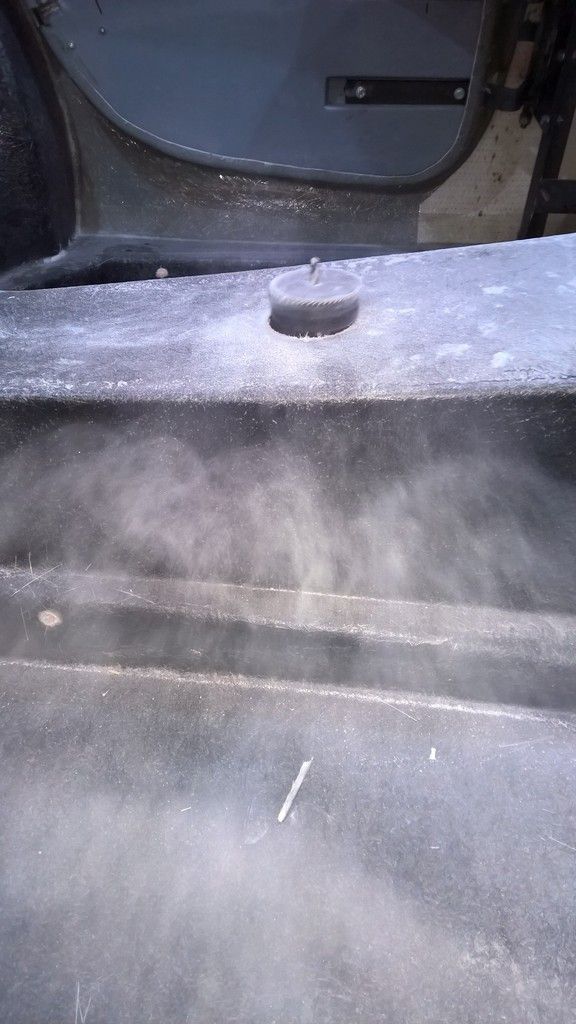
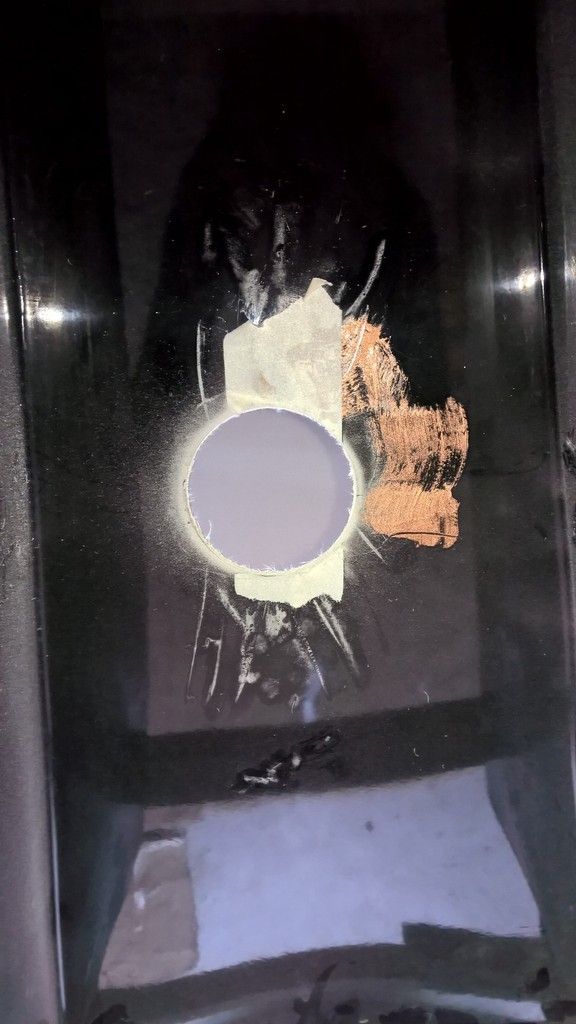
1) The AK manual says drill the hole central and then open it up. In actual fact this causes the filler cap to catch on the bodywork as you screw it on so it helps to drill about 1cm towards the rear of the car - this might not be exact so please make your own call on the exact point to drill.
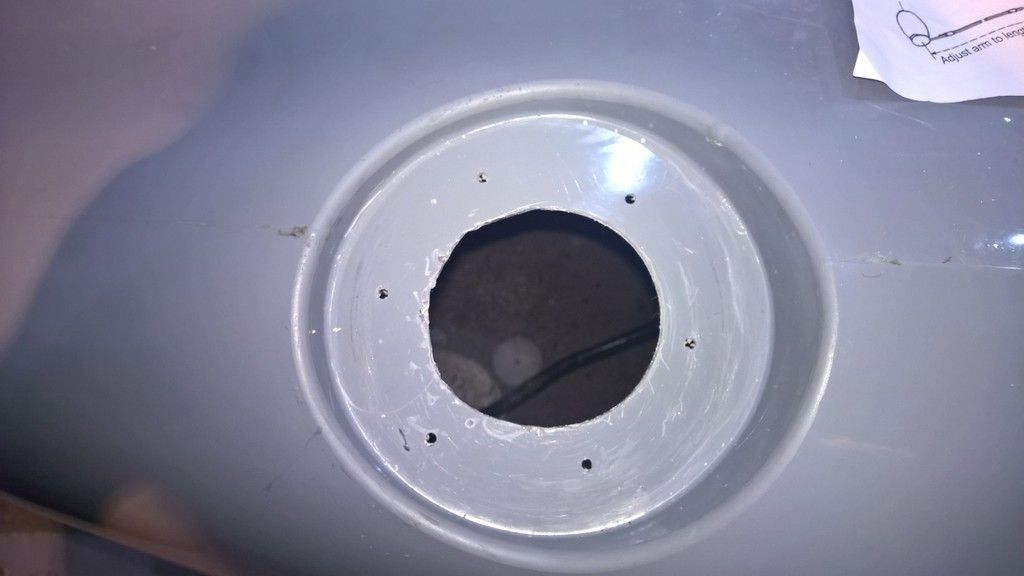


2) My first thought was to sikaflex the adaptor onto the body after paint but this will only work if you have purchased super flexible hose. I hadn't and it was so difficult to bend the hose and it kept pushing the adaptor back off the car. The adaptor plate comes with partially drilled holes in the underside, you can drill this through with a 3mm carbide drill bit and then open up to 4mm from the top side. You can then use a 8mm drill to countersink the holes without risking damage to the threads as others have reported in their blogs (its certainly close though so be careful). Flat countersunk M4 bolts can then be used to fix the adapter flange to the body and the cap will screw into place (note that the bolt heads must be fully flush with the flange as the cap screws right down onto it).


3) If you have read Tommys Gen I blog then youll note that he made an elongated hole halfway down the wing to fit the tube. This is necessary as the hose wont bend enough which means the 20" tube AK advise you to buy isnt long enough if you want a smaller neater hole. I have addressed this by buying a 2" 45 degree aluminium hose joiner from AP Automotive. I'll post some pictures of this once I complete this part of the job.

4) When screwing the cap down onto the flange have it open and stood at 90 degrees as it will give slightly more clearance to avoid hitting the body work.

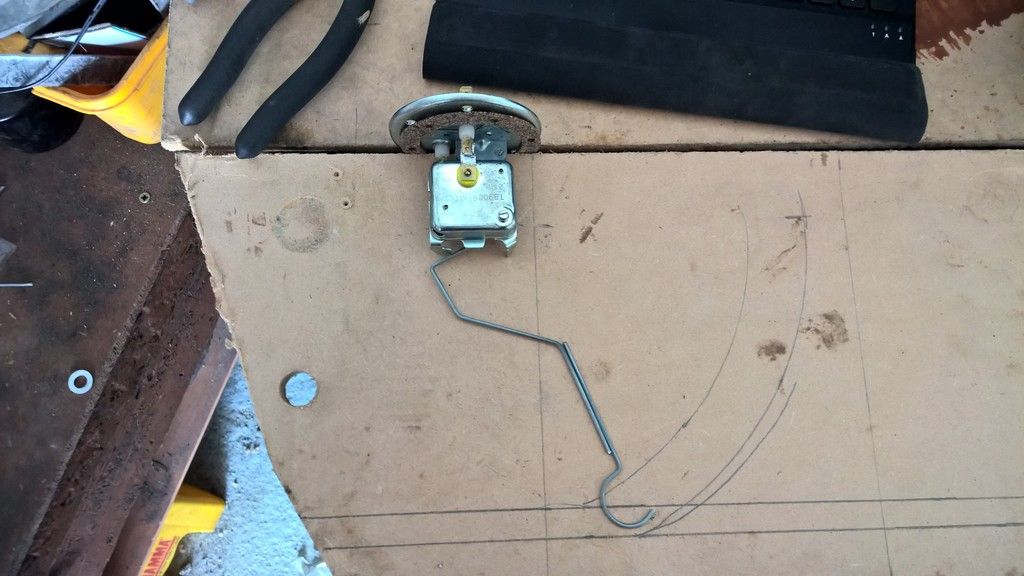
5) The smiths fuel sender comes with a measurement table to adjust the length of the float wire. This doesnt go small enough as the AK tank is 7" deep. AK#s method is to make two lines on the wall however I found using a piece of wood allowed me to lay the sender on its side, draw a line to represent the bottom of the tank and then place a pencil at the point the sender touched the bottom line and just move it up to ensure it could go to the full position. Both wires then need cutting, soldering together and the float adding before placing into the tank with self tapping screws and silicon sealant.

6) The breather pipe is simple fuel hose that goes through the wing and can have a one way valve added and if necessary drill it into the fuel filler. Some people drill and attach this to the filler cap but I have chose to buy a proper valve that will block off if the car rolls to prevent fuel leakage (only £12 from ebay)
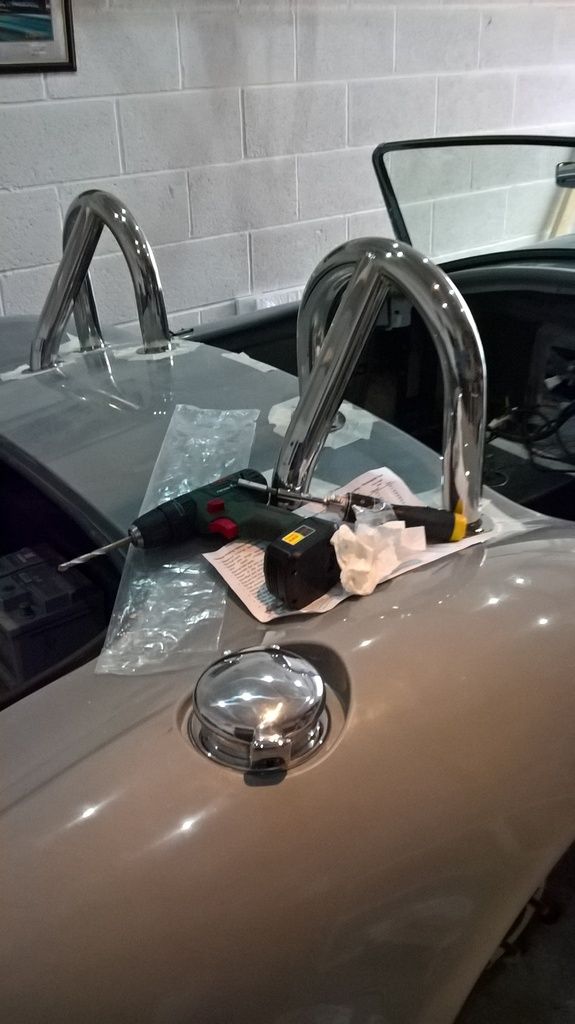
7) Drill through from the boot side otherwise you can end up way off the filler like I did, needing then to do minor fibre glass repairs. 
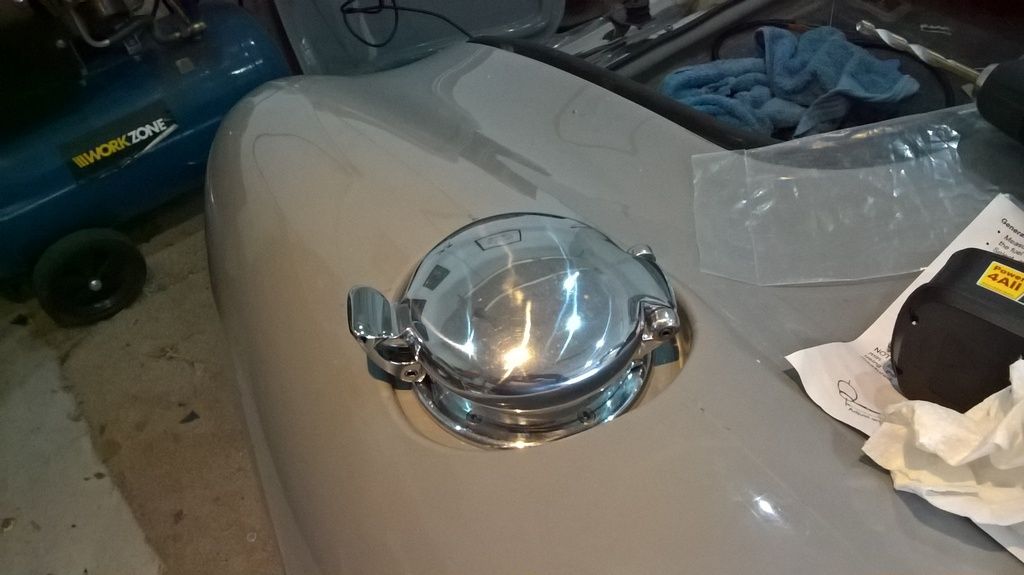
The AK manual says screw it on as far as it can go without hitting the bodywork and there is debate regarding which direction the cap should point to be IVA compliant. 

The pictures here shows where mine is pointing to help others figure this out. I do not know if this will pass IVA but its the best I can achieve without hitting the body.


Tuesday, 3 May 2016

Its Christmas..I mean Stoneleigh (Windscreen)

It certainly felt like Christmas with the amount of new parts I bought at Stoneleigh, and the big hole in my wallet following the event!

I didnt spend much time looking around this year as I needed to get there, get my parts and get back but it was still good to catch up with a few old friends.

The biggest purchase of the day went to Brasscraft as I collected the aston filler, windscreen, rear view mirror and front/rear nudge bars and overriders.

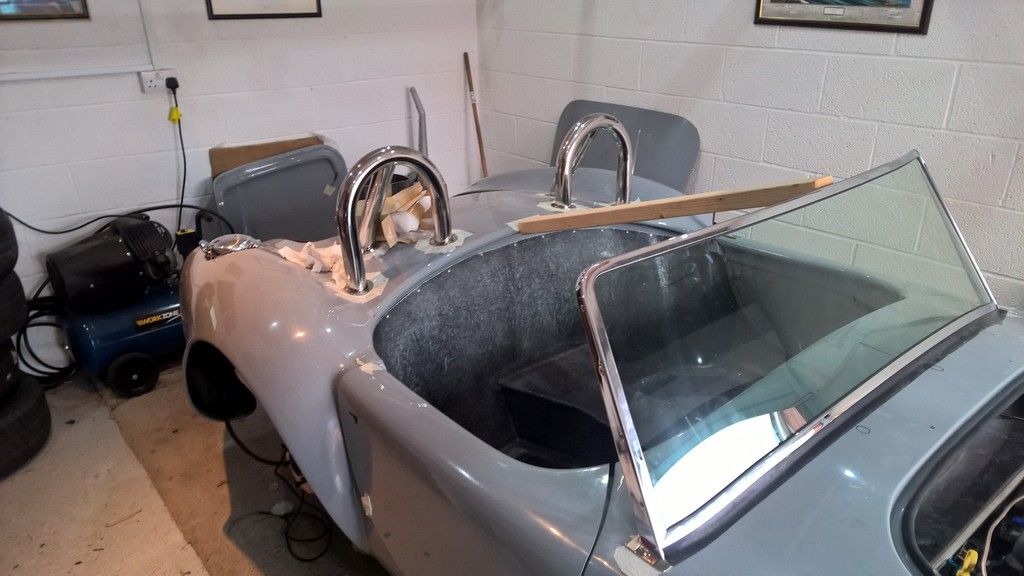
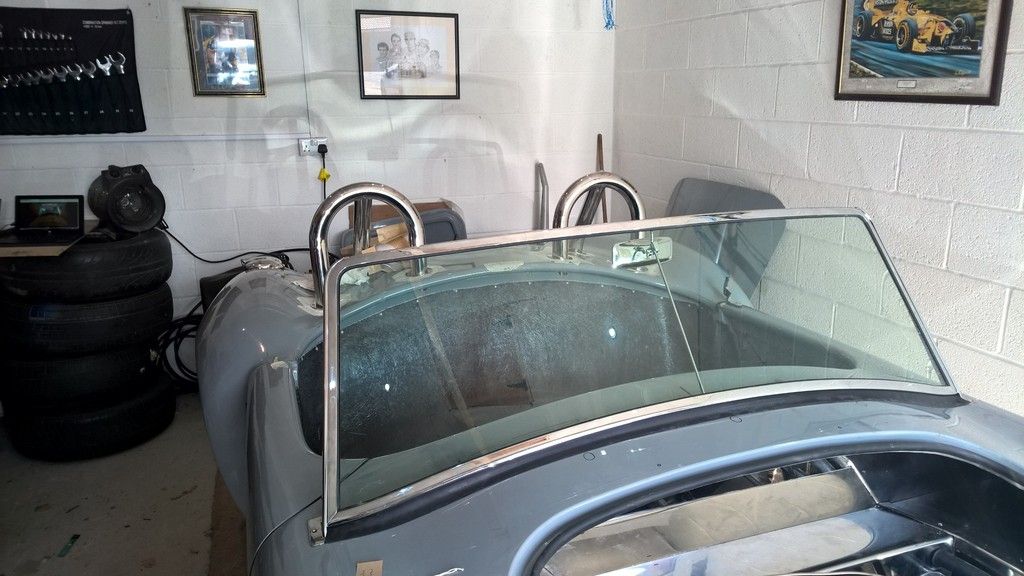
Fitting the windscreen requires two people so I roped the mrs into helping, she even fitted the rear view mirror herself :-)

The AK holes needed a little adjustment with the file to allow the screen to slot into place and getting it to sit right down is still very difficult as the screen doesnt precisely match the body shape. Probably why there is such a big rubber seal.

Before attempting to fit the screen, add masking tape either side of the support holes so that you can mark the holes for the escutcheon plates and dont forget to put the plates onto the supports before you lower it into position.

As it is lowered into position you pull the rubber forward; if you dont do this or at least continually do it as it moves into place then this does stop the screen from getting as low as it can. The support legs needed a gentle adjustment with the crow bar on the nearside to get them to clear the scuttle but nothing significant.

Add a piece of 2 x 1 inch wood, 36 inch long and you can get the desired screen rake.


One tip - add the centre stay before fitting the screen otherwise you wont get it on afterwards due to having no room to get the screws in (as I found out).

Once in place, G-clamp and drill holes in the scuttle. The manual says to tap them but I drilled 8mm right through the frame and the used M8 x 70mm bolts with nylocs.

After it is fitted in place..... you guessed it..... remove it again! 

This is to drill and fit the escutcheon plates - don't forget to mark the holes before removing the screen. 

Refit the screen and all done!


Sunday, 17 April 2016

Roll bar brackets

As I had an hour to work on the car today I decided to fit the brackets for the roll bars, which also involves drilling the holes for the seat belt eye bolts. 

This brackets themselves are one of the most straight forward jobs there is, simple M8 bolts with spring and normal washers is enough to lock them down but it does take time as there is lots of off/on as you figure out the correct positioning for the eye bolt.


There was two holes in my body where AK had drilled the holes to pre-fit the roll bars and I found the eye bolts to be roughly 5 3/4 inches from this hole, about 3.75cm from the back wall lip. (apologies for the change from imperial to metric - I do that sometimes)

Frankly is a bit of trial and error but dont worry too much as you can easily fix a mistake with some P-40 (I'll certainly be doing this)

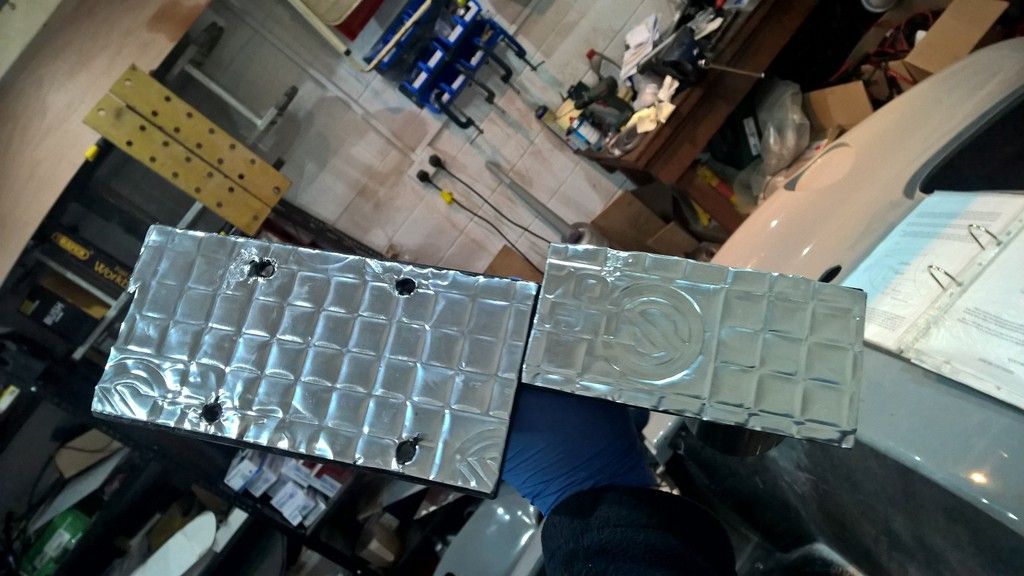
Many people complain about vibration in the roll hoops so I have fitted some silent coat to the underside of the brackets as removing vibration is one of its key features. 

For the bracket that is pre-fitted to the chassis I'll need to cut a circular piece and place it into the bottom of the bracket. This should significantly reduce vibration.


As this job went quite well I decided to place the roll bars into position. 

You can see from the photo that one went in easily, however the other is going to required some man handling to get into place so I decided to call it a day and I'll come back to this job later.

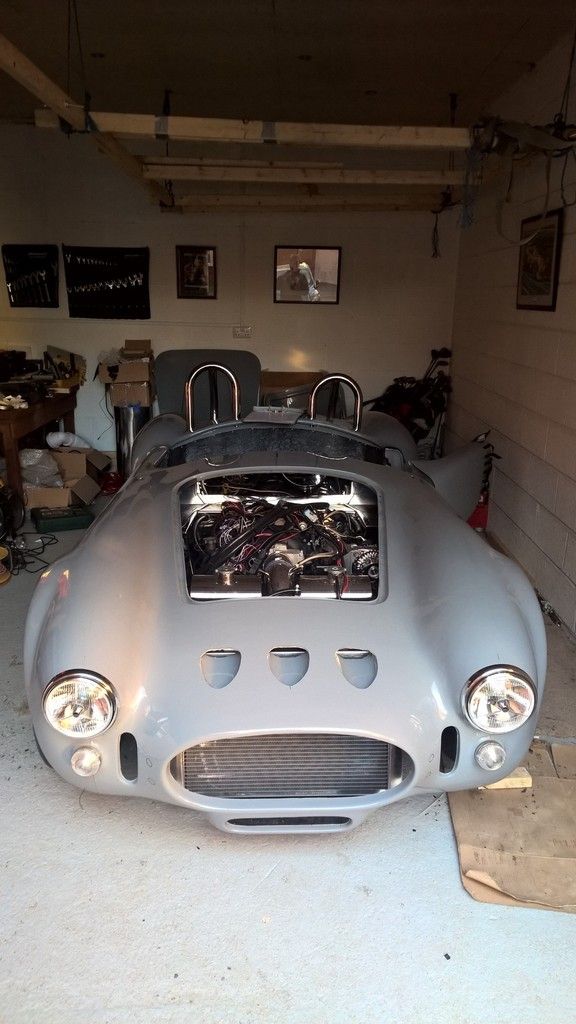
Looking back as I close the garage its a major motivation seeing a car instead of a rolling chassis; it really feels like I getting somewhere with it now. 

Hopefully I'll be able to get some time in the garage over the coming weeks to fit the rest of the lights, locks and latches as the windscreen is being collected at stoneleigh.


Saturday, 16 April 2016

Body Goes On

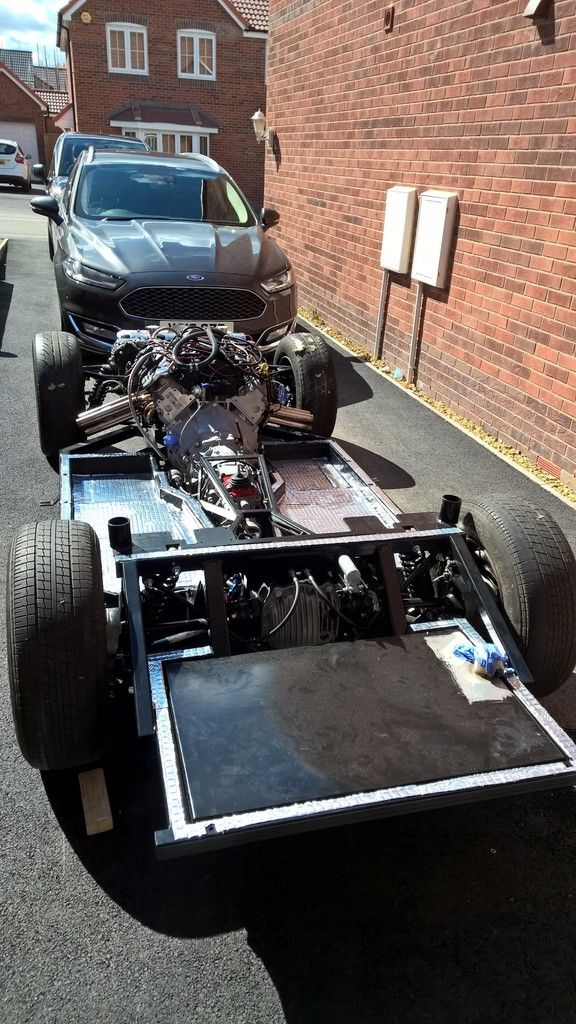
At long last another major milestone was reached today when the body went on the car permanently but before I show the final result there was a couple more things to sort out.

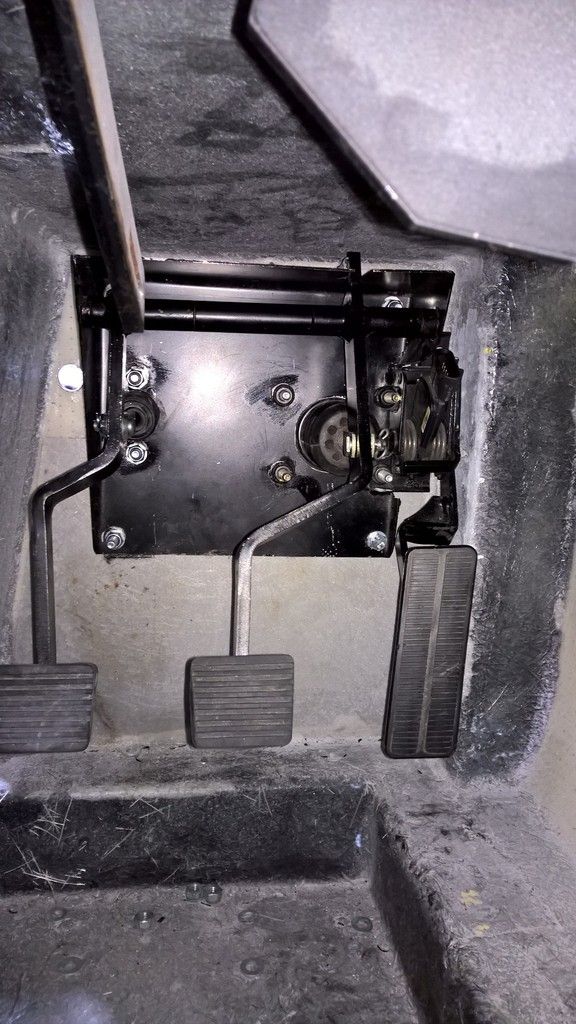
First job was to fit the pedal box and servo and in true Cobra style this is where I hit the first problem. 

The accelerator pedal was catching on the body which felt like a disaster; I just couldn't bear the thought of that sticking whilst driving so after trying to push and pull it around, grinding a bit of the pedal and taking in and out what felt like 100 times, I came up with the idea of drilling out the bolt holes on the pedal box to 12mm. 

This allowed the pedal box to be moved 2mm further away from the side of the body which cured the problem but this job took hours to complete and frankly is one I am glad is over and done with.

I'm still not sure the adjustment on the clutch pedal is quite right but I can test that later once I've re-hooked up all the clutch and brake lines.

Next job was to prepare the chassis to accept the body. Normally this would involve putting silicone sealant all over the body. My view on this is its messy and unecessary as it makes it extremely difficult to ever remove the body, if the need arises. 
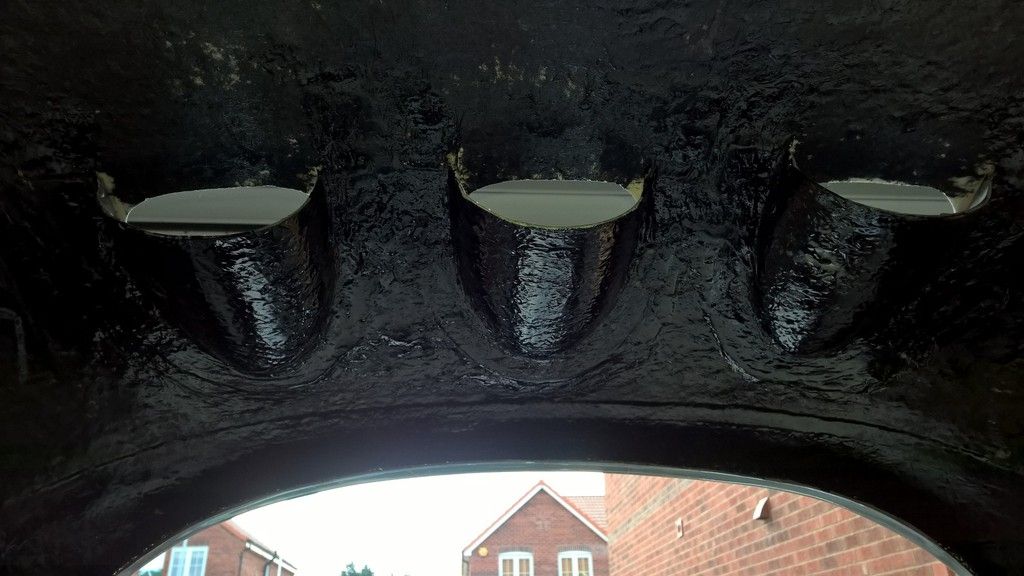
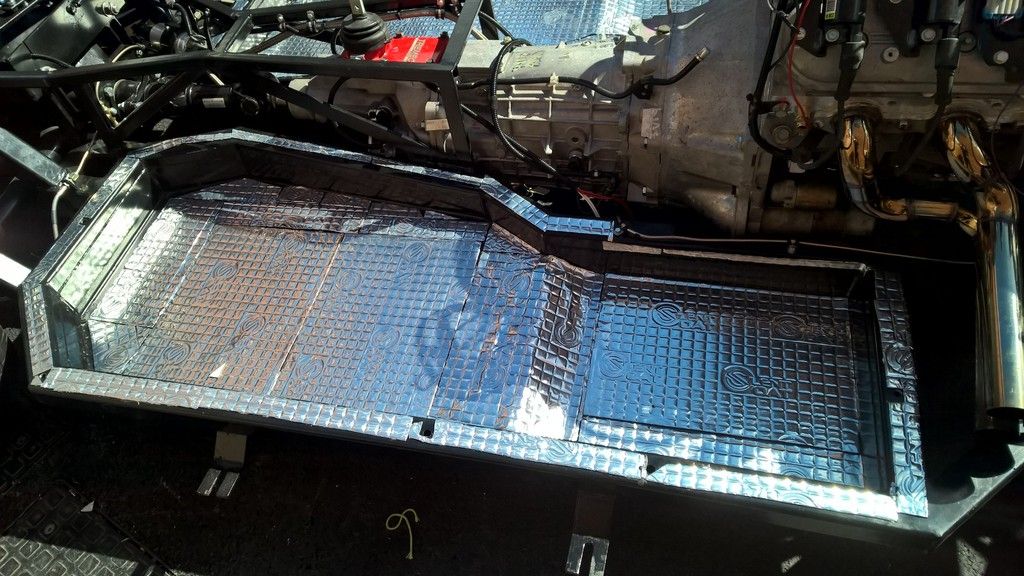
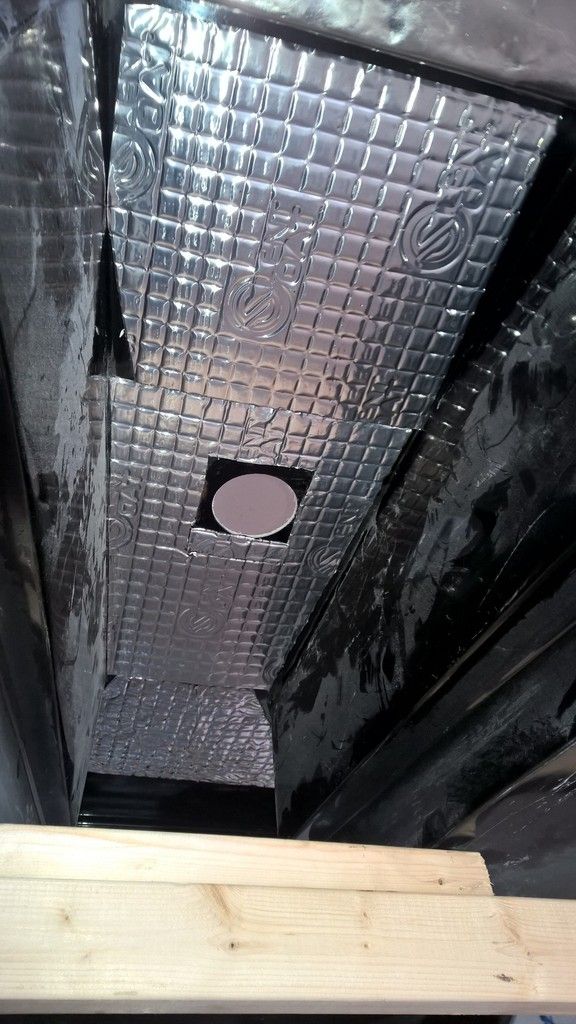
After some research I found an alternative which had a number of advantages. A product called silentcoat. I bought a bulk pack for £84.99 but I have loads remaining so a smaller pack would no doubt be ok. I spoke to the firm and they advised that as long as all gaps are filled by placing the pieces close together it would form a barrier. 


The product also reduces vibration, deadens sound and acts as a thermal barrier so I figured this would help reduce road noise so that I get the full engine/exhaust noise and help hide the whine from the fuel pump. it cuts to shape easily with scissors and follows the contours of the car well too as its only 2-3mm thick.

I even placed some in the tunnel so I'm hoping this works out well, mainly as it was a lot more expensive that silicon sealant :-)

It was finally time so a quick text to call round a few friends and on it went. I was surprised how quick and easy it went into place until I tried to put in the chassis bolts. 

There is two 8mm bolts that go right through the chassis in the boot and four M10 bolts through the wings in the engine bay. These all went straight into place. 

The main body was a little more difficult. First, the diagram in the manual shows that there is a hole at the front of the footwell but there isnt. There is five holes around where the driver and passenger sits. Two 10mm by the main scuttle that go right through the chassis - these would line up and took a while to locate.

The remainder are all 10mm threaded holes and again some were difficult to locate, others damaged the fibre glass as they slowly pulled tight. Not a major issue, just a little annoying.


AC Heater Unit - Part 2

The heater unit fitting needed to continue before the body could go on but there wasnt a great deal I could do on this. 

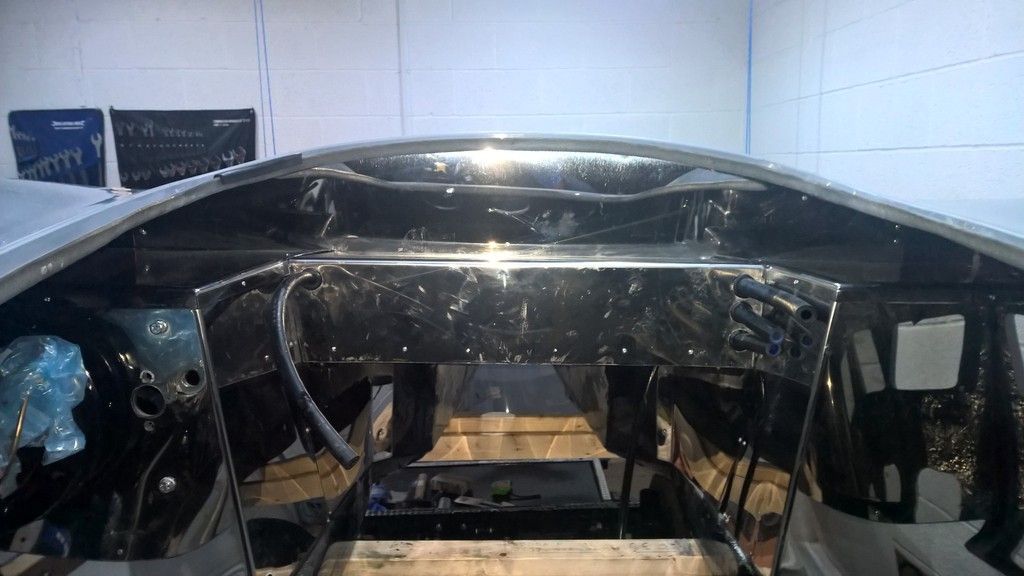
First I cut two holes in the stainless inside the area where the heater was going, one on each side of the tunnel. This was so that I could add footwell vents purchased from T7 designs. These just clip into place after cutting the right size hole (about 74mm).

Next was to drill holes for the water and a/c hoses to fit through. This is a slow and steady job, first use a 3mm carbide drill bit at slow speed with cutting fluid and after this you can open the hole fairly easily 2mm at a time with normal drill bits. Dont forget to use rubber grommets to protect the tubes.

A drain hole was also required to pass the drain tube through, but other than that all the edges were sealed with sikaflex to meet the IVA requirement that no air can be taken from the engine bay (note there is a caveat that drain holes are ok as long as they are less than 1% of the overall space used to take in air).

Following riveting the panel in place and adding a p-clip for the drain hose the stainless protective sheet was removed from the engine bay and now the heater will be left alone until after the body is on. 


Sunday, 10 April 2016

Last few jobs before body

The heater unit still needs to be completed which I hope to do tomorrow, however, in the meantime I have managed to wrap up a few smaller jobs that needed doing ready for the body fitting. 

First up was to fit two p-clips to the fuel lines where they pass by the rear suspension arm. This was mainly to guarantee they didn't foul on the arm, which would be an IVA fail. The hardest bit of this job was drilling laid on my back under the car, it took over an hour to do just this job.


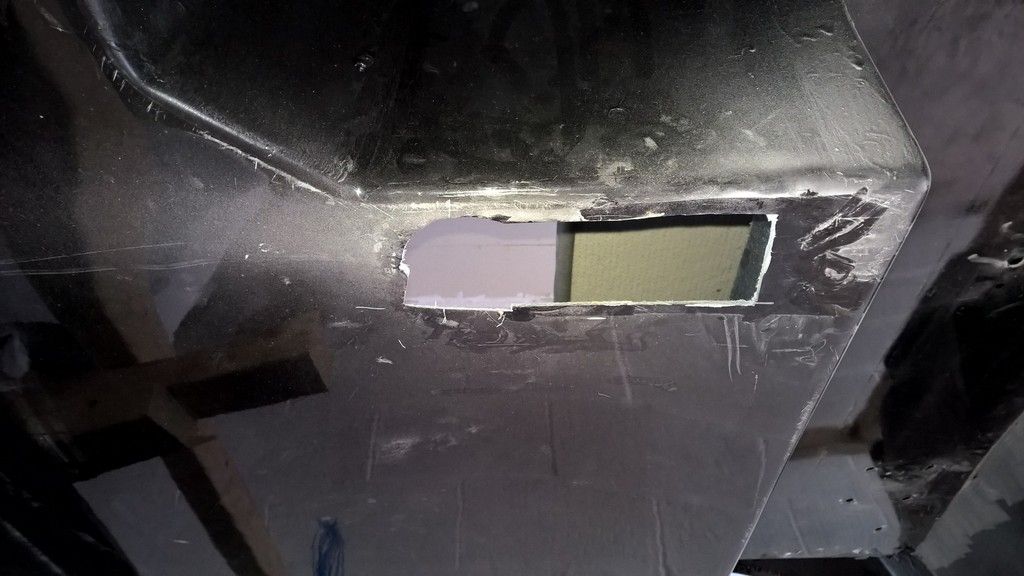
Next was to mark out and cut the hole for the fuel filler pipe to fit through, a fairly straight forward task that took just a few minutes with the angle grinder. 


Finally, it was time to cut the hole for the gear selector to fit through, This is one of the tasks I have been worried about because its easy to measure up wrong and until the body is on I wouldn't know if I had chosen the right gear select position (The T56 has to choices of selector position about two inches apart - I had it on the default rear select position)

To work out where the hole needed to be I marked on a piece of wood where the bolt holes where on the chassis and a mid point between these two holes. I then measured forward to the selector. Marking on the wood allows the wood to be held in position on the body giving a solid surface to measure forward down the tunnel to put a mark on the tape.

Next I measured the width of the tunnel, and the width of the chassis to calculate that I needed to be 10.5 cm across from the passenger side of the tunnel. 2 mins later I had a 3mm pilot hole.


I chose to use a large hole cutter to ensure I had enough room to bolt on the gear lever; I could have chosen a smaller one in case I had got the measurements wrong but I thought "lets live dangerously" - hopefully I wont regret that decision later!

So all that's left before the body goes on is a trial fit to test the extended heater tunnel, fit the heater, pedal box and servo and then I'm ready to go - I think.

Exciting times :-) 

Sunday, 3 April 2016

AC Heater Unit - Part 1

From an early stage of the build I always wanted a useful heater / cooler because, like goldilocks I like to be just the right temperature.

This meant having the controls on the dash so this meant that they needed classic design. I also wanted modern controls, variable heat and dash/windscreen adjustment.

So after hours and hours of research I came to the conclusion that I wanted the controls made by old air products show below.

Unfortunately the heater unit was too big to fit in the car so I needed a separate unit. After more research and lots of checks to ensure I could connect these controls I decided to purchase the following unit from T7 Designs.

But I still had an issue. The T7 unit was compact, also did A/C (for when the hard top is on) but didn't allow for variable adjustment on water flow and dash/windscreen position. This meant I had to go back to old air products. Luckily they provide an "upgrade" for their units which has these options. Picture below.


How to connect the three parts together?

First I needed to know how much room I had and when I offered the unit up into position it became clear the unit would have to mount sideways. This actually worked out well because this meant the unit would suck air in from the inside of the car rather than the engine bay which is an IVA fail.

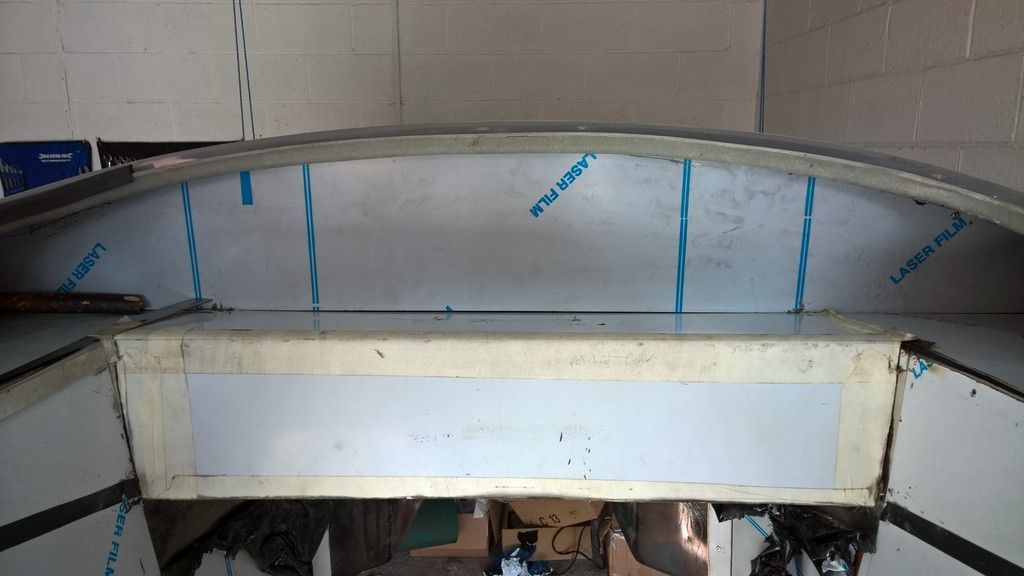
I also bought some stainless steel to extend the tunnel and box in the heater, also to ensure it wasn't pulling air from in the engine bay.

After making a wooden template I realised that the plenum from Old Air wouldn't fit as it came and so adjustment was going to be required. Nothing that some time with the angle grinder wouldn't fix :-)


Sikaflex was used to fix the parts back together and to fix the plenum to the front of the T7 heater casing. 

I'll come to the electrics later.

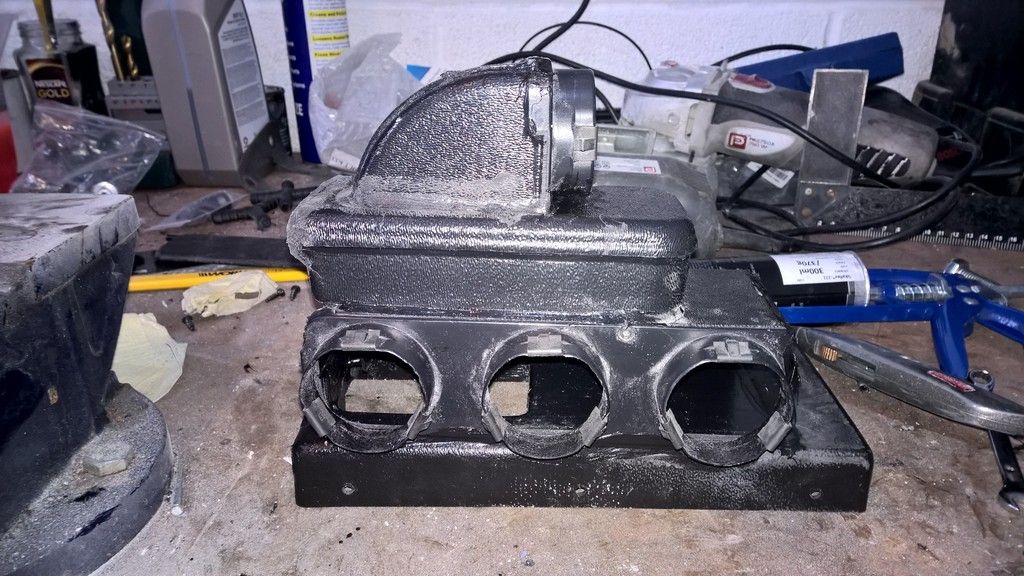
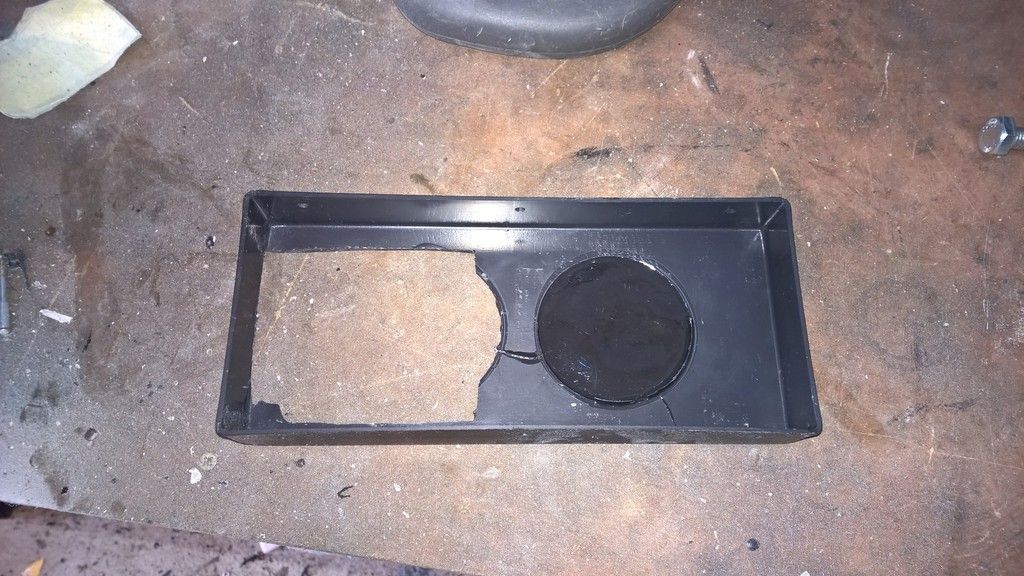
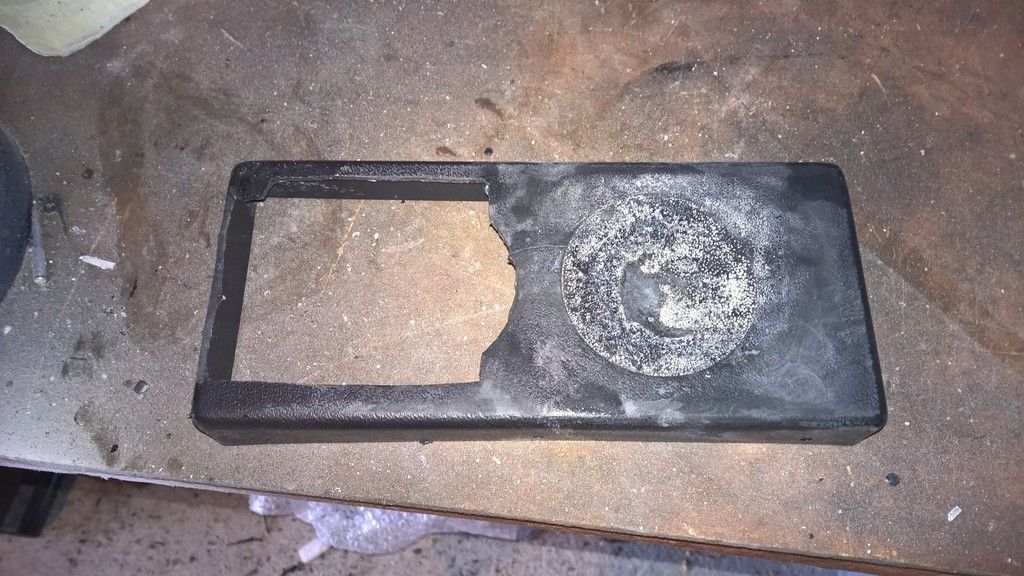
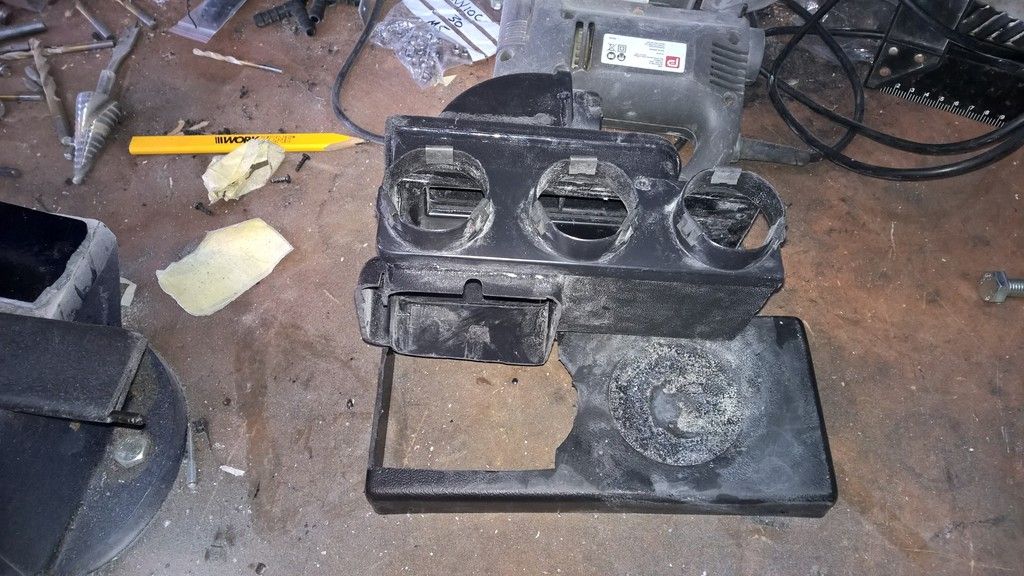
Before fitting the plenum to the heater casing I had to remove the two round connectors on the casing and then adjust it to fit the plenum. This involved cutting one side of the casing larger and blocking the other side up with liquid plastic, purchased from ebay.


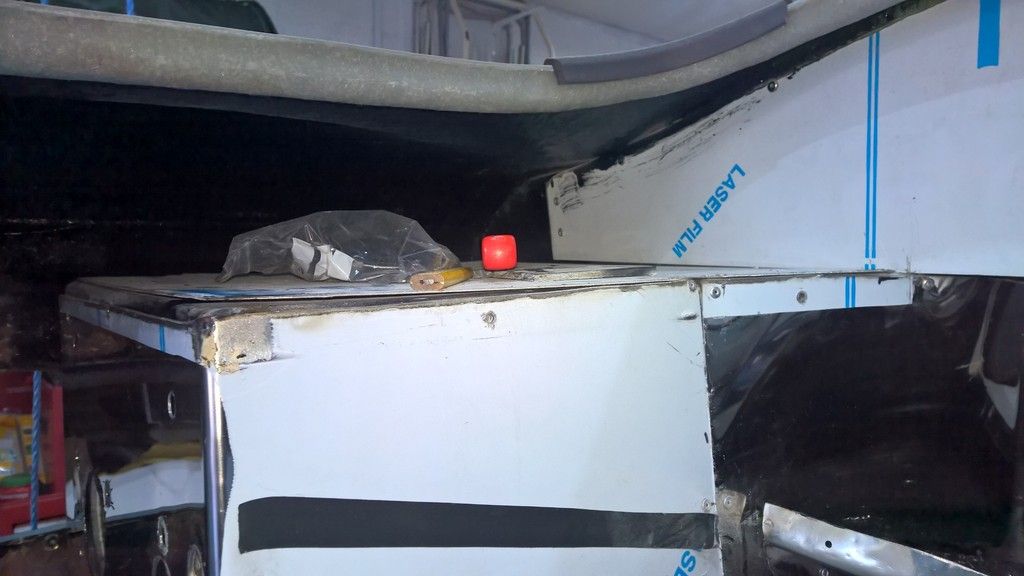
Before I could actually fit the heater unit I needed to finish making the stainless box in the tunnel. This meant drilling the steel to fit the shelf.

Stainless steel is HARD to cut, HARD to bend and HARD to drill but eventually I had the first piece in place allowing the unit to be offered up, connecting the drain pipe and air pipes. 

In order to ensure everything fitted I needed to cut a larger than normal hole in the body.


Then, I had to remove the stainless edgine strips AK had added in the engine bay. This is simple enough, just dill through the rivet head with a 3mm cobalt drill bit and then follow through with a 3.5 or 4mm bit to remove the rivet. 


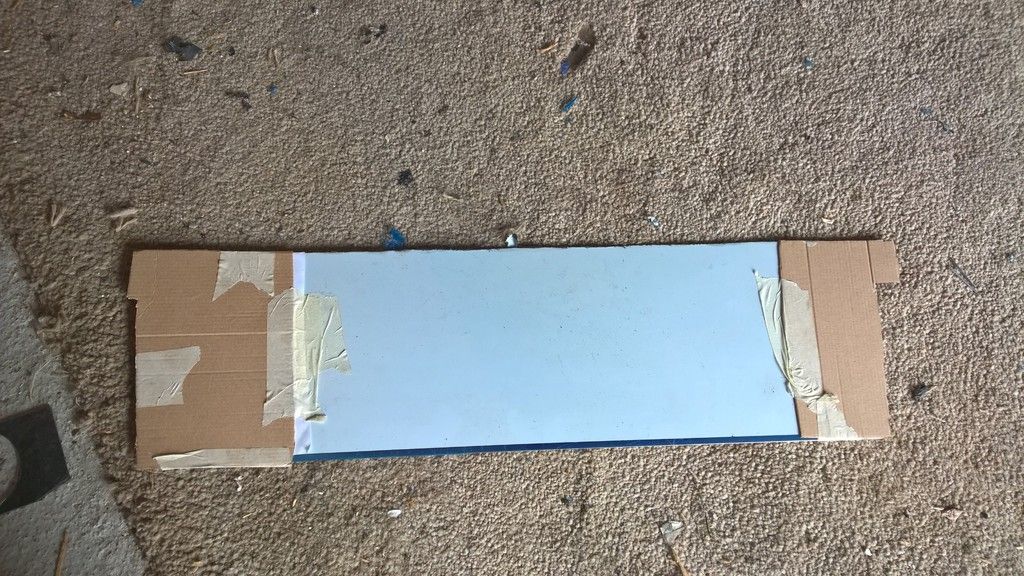
Next I needed to make a template for the front of the heater. I did this with a piece of steel and some cardboard. 


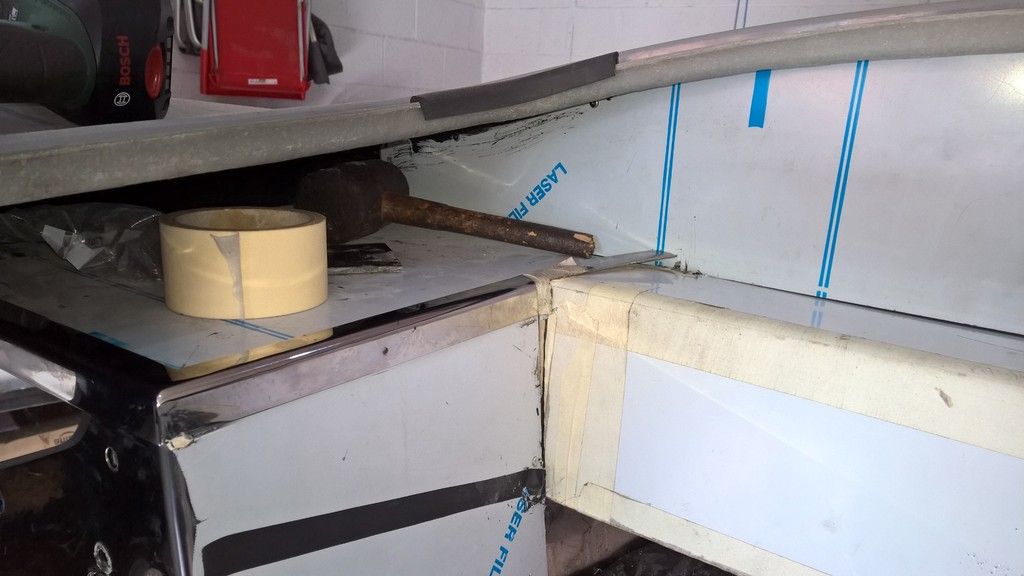
Thanks to Andrew Sharples for letting me borrow his sheet metal bender. The sheet measurements was 13cm for the top and then 16cm down for the front face. 11cm is the actual top, whereas 3cm slides under the front bulkhead like so.


Then I needed to trim the edging strips AK provided as shown below. 


Theres lots more to do on this. Watch out for part 2 coming soon. 

Side Louvres

Fitting the side louvres is fairly straight forward. I didn't like the AK option of fitting wood to the wing so I decided to buy some "big head" 6mm bolts which could be attached to the wing with P40, then the louvre bolted to that with a nyloc nut.

I first drilled four holes in the louvre and attached the big head bolts. They were a bit too big and needed trimming with the trusty angle grinder. The main reason for doing this first was to ensure the holes were in the right place once the bolts were glassed into the wing.

Before actually glassing them I removed the stainless steel sheet from behind where the servo goes as I imaged this would be more difficult once the louvre was in place.


I used a little P38 to attach the bolts to the wing still attached to the louvre (with washers holding the louvre away from the bolt head so I didn't accidently attach it in too). Then I glassed the bolt in by adding a dollop of P40 once it had dried enough to remove the louvre.

Standing and holding it in place until it sets takes the most time; about 10 - 15 minutes for each side.

(note to self - get a coffee prepared for the other side)

Repeat the other side.

A quick sand and touch up with POR-15 to match the rest of the engine bay and it was all complete.

Job done.


Triple Nose Vents

Fitting the triple nose vents is needs doing before paint if you are going the fibre glass route rather than alloy.

I chose this fibre glass as I want them painted the same colour as the car - the alloy just wouldn't have looked right with the colour I have chosen.

Fitting them requires a fair bit of standing around but it is a simple task.

First mix a small amount of P38 and put four or five dabs onto the nose vent. Jon at AK advised keep the amount small as the painters will shape them in and they can get a little funny if there is loads of p38.


Do one vent at a time and basically hold it in place until it sets, which is 10-15 minutes.

I decided to do this with my old man so he could hold it on from the inside whilst I moved it around from the outside of the car, making sure it looked right. This also meant I could do another job whilst he held it in place.

After the P38 had set on all three vents I mixed a good amount of P40 and used this to glass the vents to the body as shown in the picture below.

After a little bit of sanding just to take any sharp edges off I then painted the fibre glass with POR-15 caliper paint, the same as the rest of the engine bay.


Saturday, 26 March 2016

T56 Magnum Gearbox Sensors

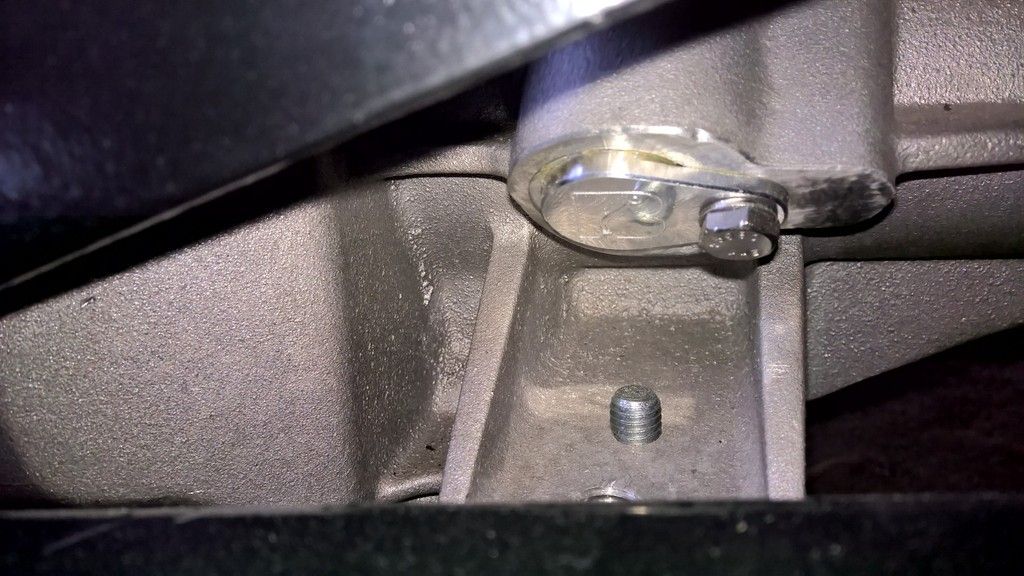
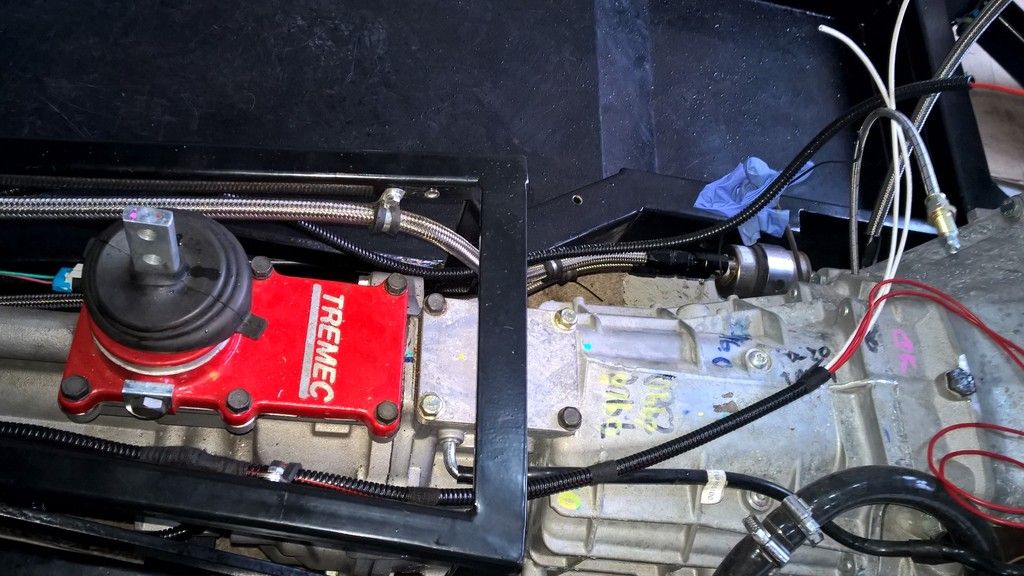
One, or should I say "another" thing the manual has no mention of how to make the reverse lights come on or how to release the reverse lockout solenoid on the gearbox. The reverse lockout solenoid makes it difficult (although not impossible) to get the gearbox into reverse whilst the car is moving forward; a safety feature and IVA requirement.

Further, if you have a Tremec T56 Magnum gearbox it comes with two speed sensor locations (mechanical and electronic).

I have chosen to go with the electronic version as you can easily buy a blanking plate for the mechanical sensor and an installation kit that has the other sensors in it.

NOTE: there are different electronic speed sensors (VSS sensor) depending on the T56 version you will have bought. I fell foul of this and had to re-order the correct sensor. 

I ended purchasing the parts from differing places but I've since found that bowler transmissions in the USA do all the parts needed:

https://bowlertransmissions.com/p/564/t-56-magnum-installation-set-includes-vss-reverse-lockout-reverse-light


Finally you will need a 1/4"UNC x 1/2" bolt to secure the blanking plate to the transmission, which I got from Kays on ebay.

First fit the blanking plate, which is on the left hand side of the gearbox (if your looking down from above with the engine in front of you). 


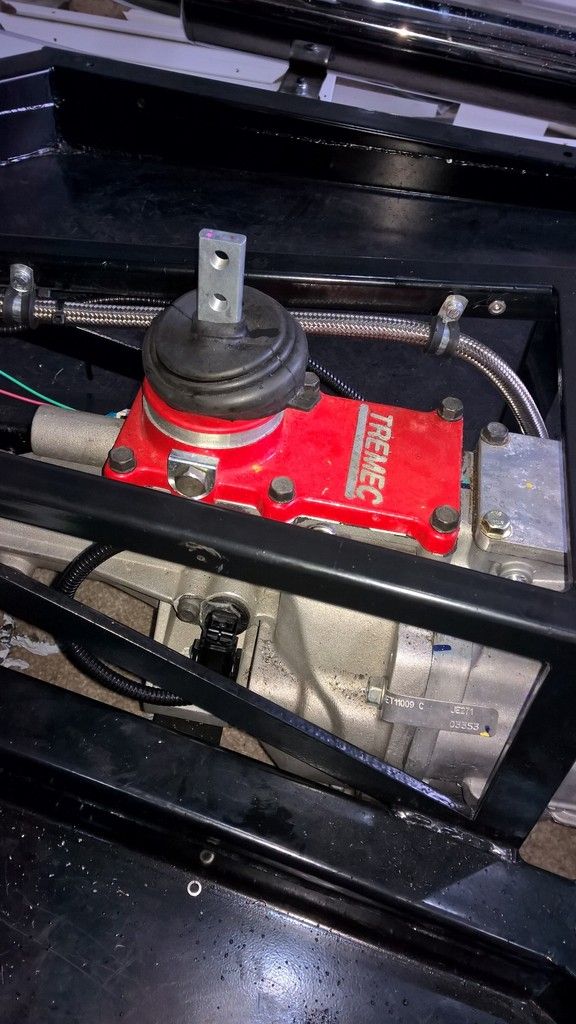
Next install the reverse lockout pigtail which goes on the sensor to the rear of the gearbox near the shifter.

There is only about 6 inches of wire on each of the pigtails so I extended them using the same colour wires purchased of ebay. There was enough wire added to get them behind the dash when the body is fitted, hopefully making the future wiring job easier. Just for good measure I labelled each set of wires with some cheap labels bought from ebay.

The crimp connectors I bought don't seem to work well so I bought a cheap soldering kit instead and soldered them together. 

This might seem like a daunting task but you can learn to do anything on youtube these days and I found its actually quite easy to do.

In order to activate the solenoid and allow reverse to be selected I also purchased the following product from Accutech. Basically, its designed for the T56 and will activate the solenoid when the car drops below 5mph. People might advise you that you can force the gearbox into reverse without this but it is not recommended by Tremec and is designed to allow access to reverse in an emergency, not for day to day use.

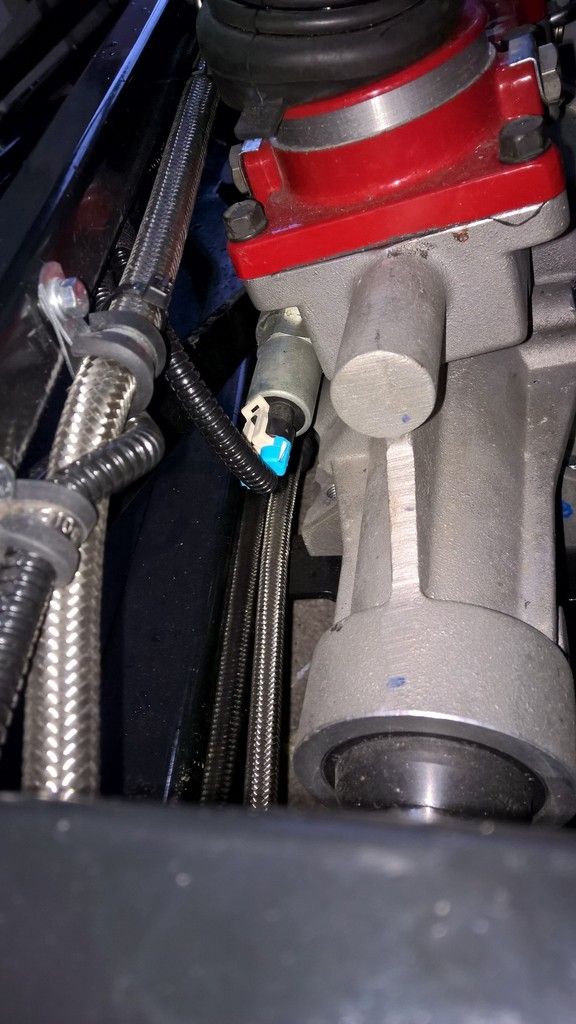
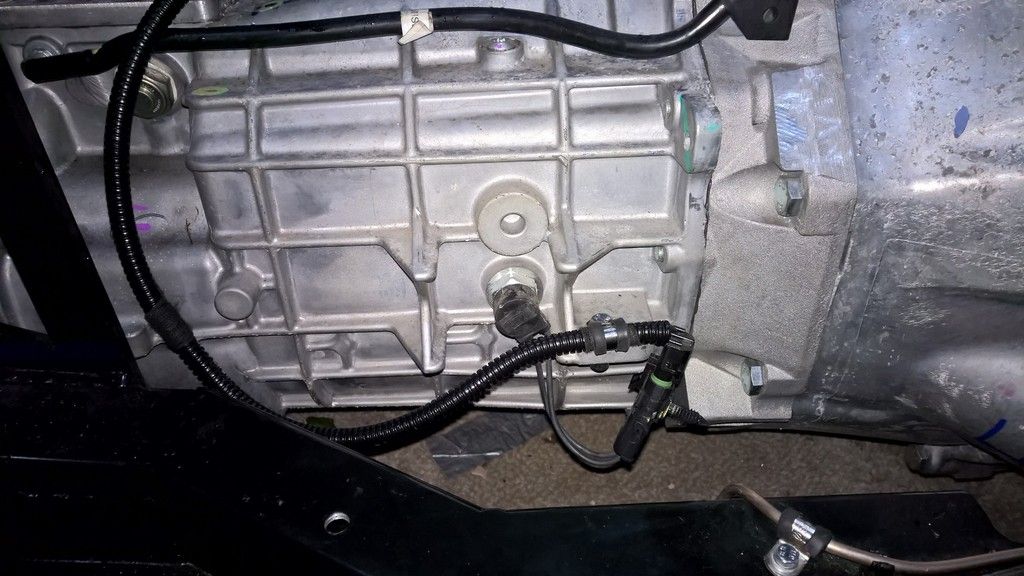
Next up was the electronic speed sensor which is located on the right hand side of the gearbox below the shifter.

All of the wiring has been placed inside 10mm loom conduit to ensure they are protected from damage. 5mm Rivnuts were added to the tunnel frame so that rubber lined P-clips could be used to secure the conduit. 


Finally, connect the reverse light pigtail, which, perhaps surprisingly makes the reverse lights come on when reverse gear is selected. This sensor already has a small amount of wire attached so I used one of the mounting "ears" on the gearbox to secure the wire with a p-clip and 6mm bolt.


As stated earlier in the post, all the wires have been extended forward to allow easy routing behind the dash when the body goes on. I am almost at the point where the chassis is ready to accept the body. There is just a small job to secure part of the fuel line which I'll hopefully get to next week.

The picture below shows the extended wires and conduit. 


Friday, 25 March 2016

Electronic Handbrake

Given I like to do the odd thing a little differently I decided to fit an electronic handbrake to the car. 

To be honest, I stole the idea from someone on the forum but then fitted it in my own way as I wasn't keen on the implementation on the forum. The handbrake is from http://www.hollinapplications.co.uk/ but the switch they give you is awful so I have bought a double pole aluminium switch from CBS to use with it instead. The key on the switch is it drives the actuator in both directions so it doesnt have an on/off (positive/negative) its more of handbrake on (positive) or handbrake off (positive) hence the need for a double pole switch.

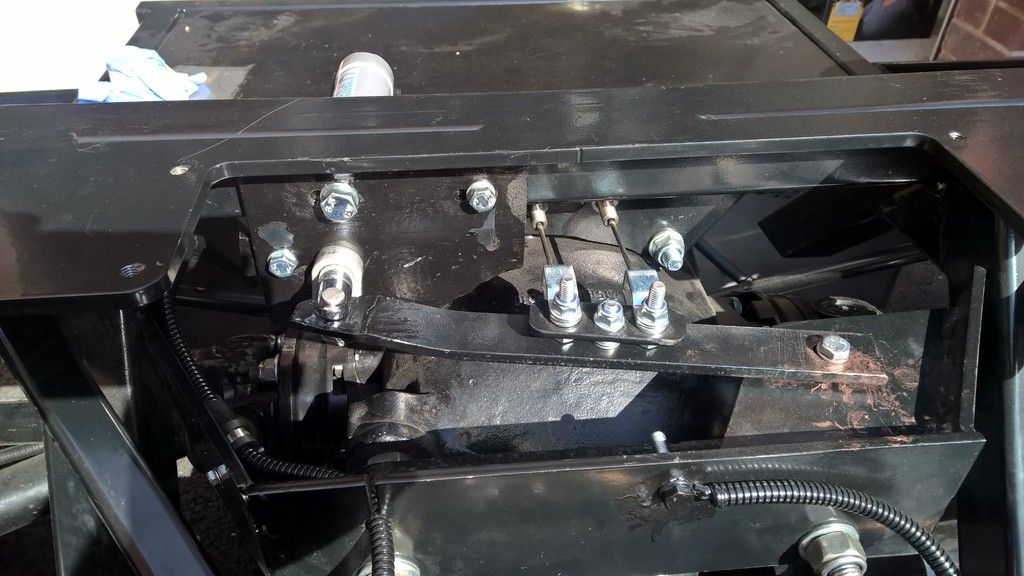
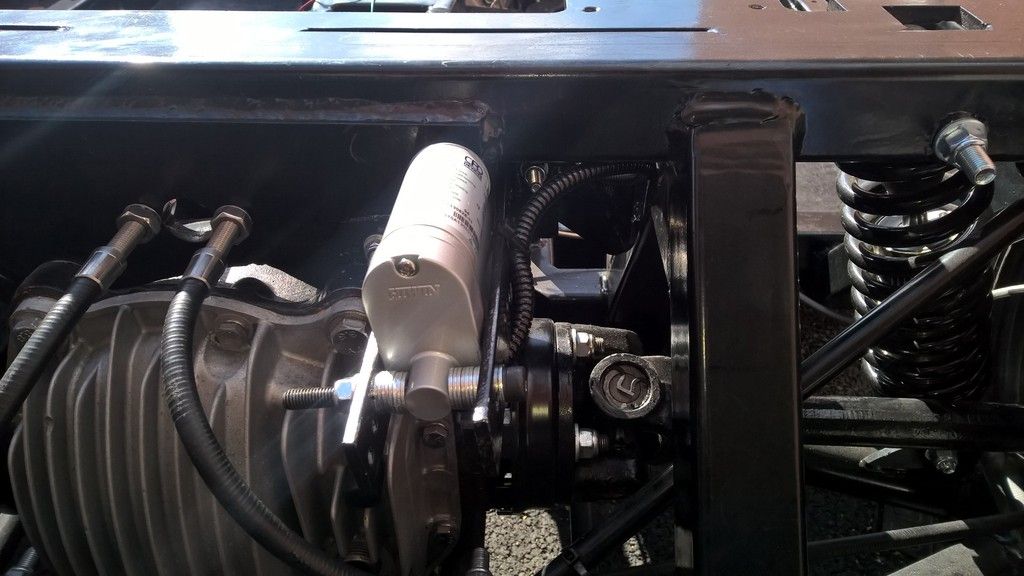
A simple 15 x 15cm steel plate was drilled and bolted to chassis after shaping it to fit around the diff and then a hole was made to fit the actuator through. Angled steel was then used to connect the actuator to the plate utilising 8mm 8.8 bolts for the brackets with an 8mm 12.9 bolt for the back of the actuator. (12.9 is rated at 1200nm whereas 8.8 is 800). The actuator can be adjusted up to 800nm so the bolts chosen should be well within the operating range. 

All steel used was 5mm thick for strength.


I had to thin the steel lever that AK give you to fit the actuator as it was too thick to fit into the gap in the actuator but other than that it is a simple setup because the actuator just pushes the handbrake lever instead of the cable pulling it.


A few minutes creating the test wiring and it all worked very well. I chose to extend the wiring from the actuator so it can be run through the tunnel to the dash which allows easy adjustment of the handbrake should it be needed at IVA.

The two wires are placed within 10mm loom conduit, routed through the handbrake cable hole that AK provides and held into place along the tunnel with 5mm x 20mm bolts into M5 rivnuts. 

Wednesday, 23 March 2016

Build Week

This week has finally seen some progress on the car as I had booked the week off specifically to get 3-4 days on it, the rest of the days will be spent on some well deserved family time.

I have a few articles that need finishing which hopefully I'll get to at the end of the week but until then heres one little snippet of this weeks work.
  • Custom heater system
  • Electronic Handbrake
  • Side Louvres
  • Nose Vents
  • Wheel Arches
  • Manifolds
Articles to follow on most of the above but I'll cover the Manifold here.

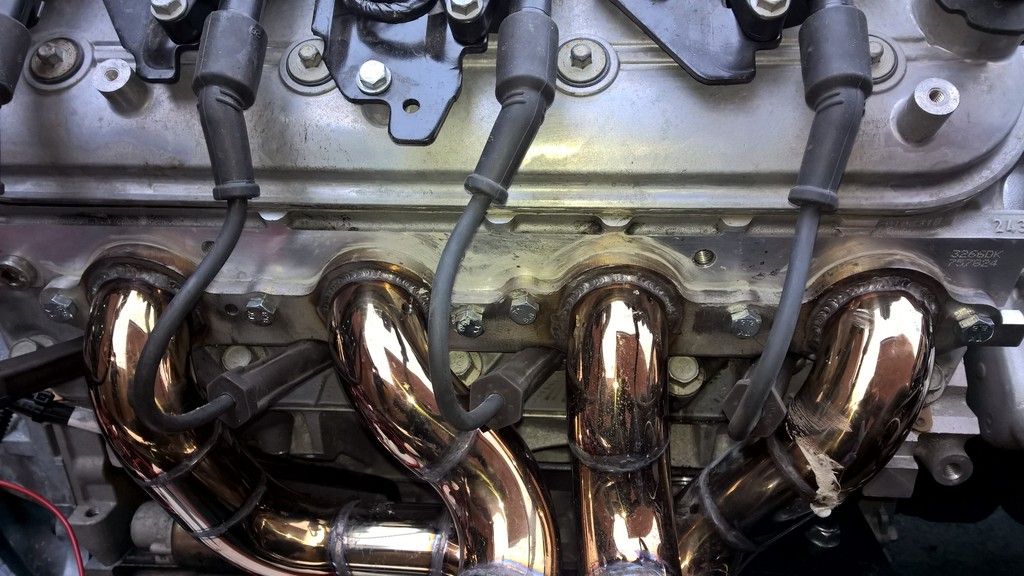
Basically I noticed that there was a lot of soot around the manifolds suggesting a leak. When I removed the manifold to check it I noticed that the hand made, stainless steel manifolds that AK built and fitted had no gasket or even assembly paste on them. No wonder they were leaking!!

Frankly I find this a bit annoying given they cost over £1500, surely its not that difficult to make a gasket too?

So this became an unplanned job for the week. Following a quick clean with some petrol I added a little assembly paste and reattached the exhausts.

The longest job was re-wiring everything so I could start they engine to check for leaks. 

Luckily all good.

There's not much to see but I do like to add the odd photo to my post.


More to follow....

Monday, 7 March 2016

Life gets in the way

Apologies to the readers out there that follow the build but there hasn't been much progress lately. The boxes of parts are building up in the garage and I have a build week planned towards the end of March but in the meantime I have been tied up redesigning the house so Katie can open her Hypnotherapy business www.clearreflections.co.uk
The picture to the right shows the hallway. There used to be a toilet here; to get through the kitchen you had to walk through the room to the right of where I am stood and walk round to the kitchen (it was all open plan). The room to the right is now the therapy room, with the new false wall shown below.


Next I needed to redesign the kitchen, below are the before and after pictures. I have a few tidy up jobs to complete such as pelmet, an extra bit of granite worktop and some holes to fill.

I still need to rebuild a toilet and utility and a dining room in an extension but that call all wait as the Cobra is getting some time next. 

BEFORE


AFTER